A strategy built as an extension of last year’s plan may reflect where the business was, but it can’t guide where it needs to go next.
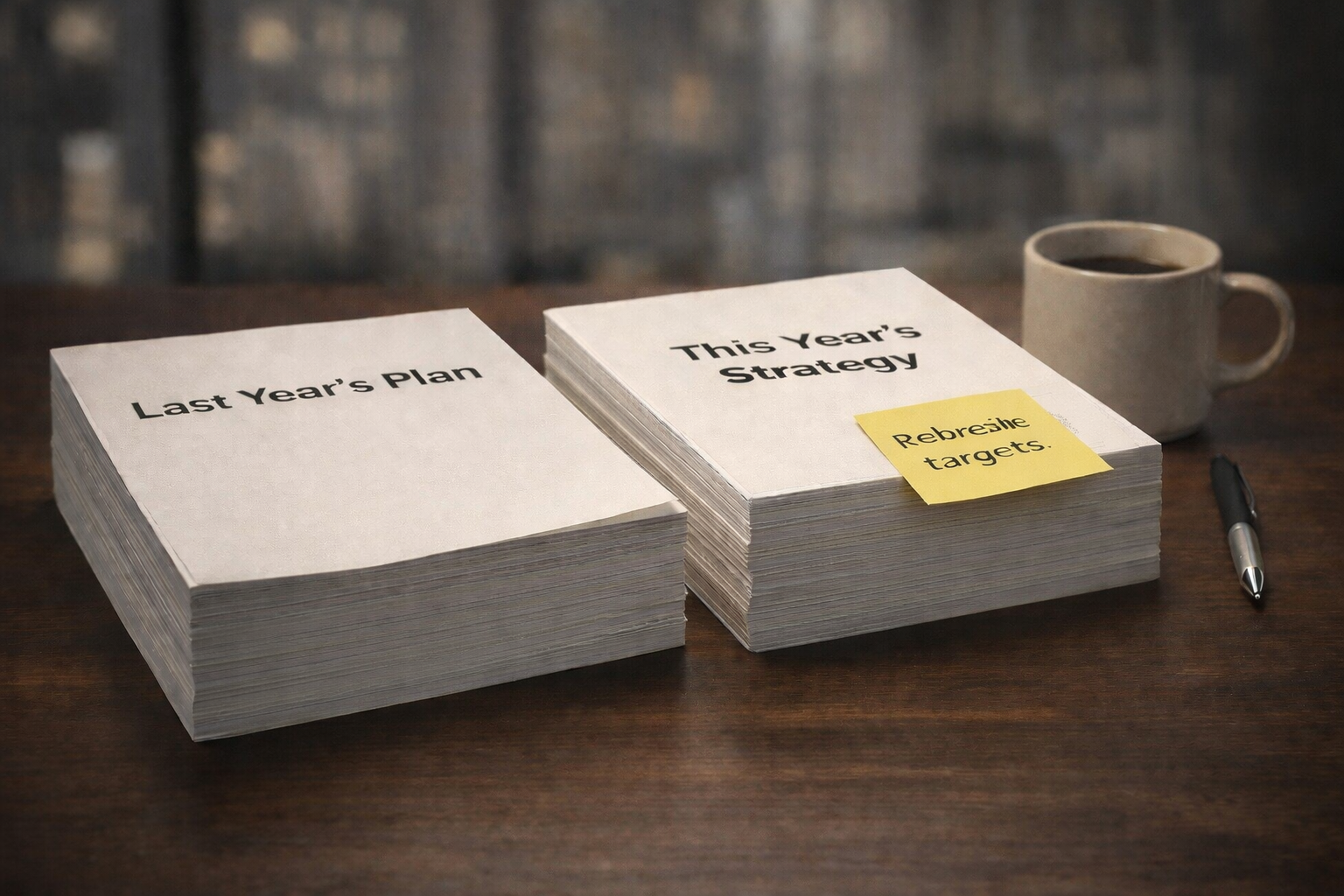
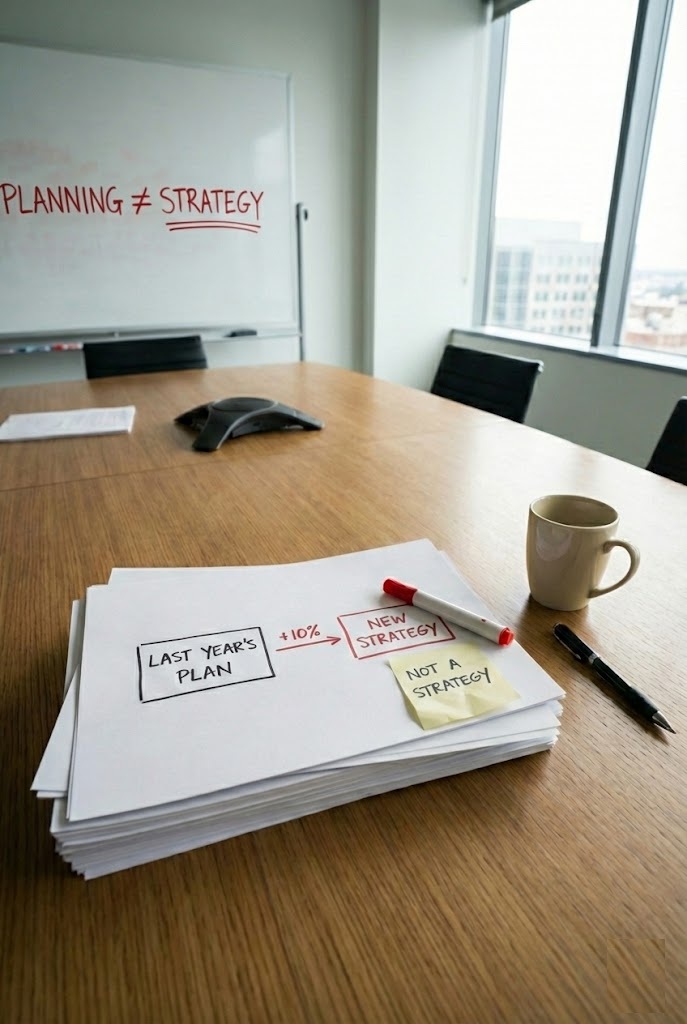
Last-year-plus planning happens when planning gets mistaken for strategy. Instead of examining internal realities, market shifts, and what’s actually unfolding, last year’s plan gets lifted, adjusted, and presented as strategic direction.
It can feel comfortable and give the impression that the strategic work is done. But turning last year’s plan into this year’s strategy asks it to do something it was never designed for. And when an outdated plan is treated as strategy, the organization ends up guided by assumptions that no longer match the market. What looks like a standard process often leads to piecemeal decisions, missed shifts, misallocated resources, and choices anchored in the past.



Consultant-led cycles prioritize large decks, not living decisions.
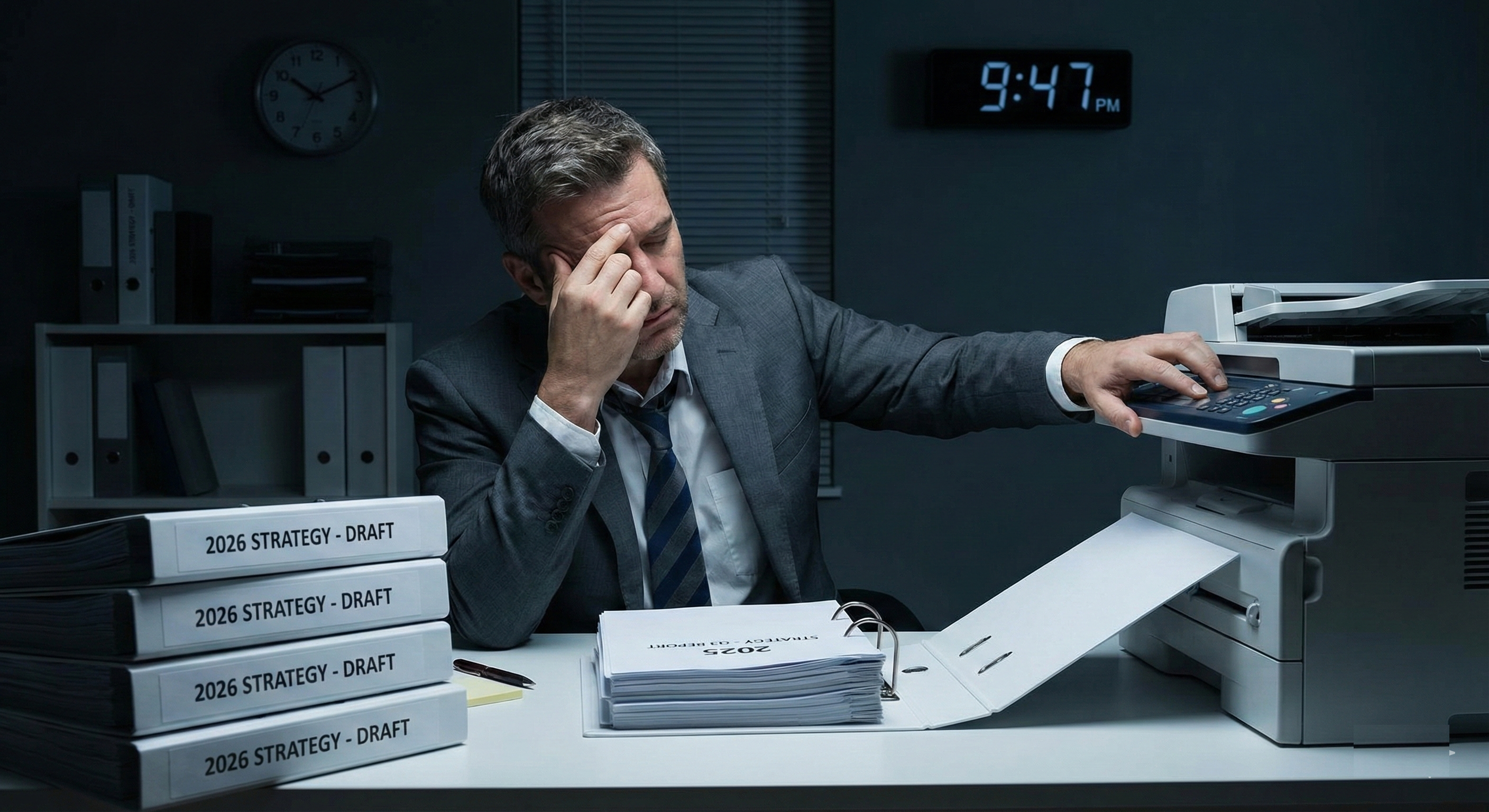
Leaders are stretched thin, so reusing last year’s work feels efficient.

No shared system keeps real-time data, risks, and trade-offs in one place.

Adjusting mid-year feels risky because the strategy is frozen in a slide deck.
Decisions based on outdated information make it harder to see inflection points as they emerge.
Resources stay tied to legacy bets that no longer create value.
Teams lose confidence - “we plan every year, but nothing actually changes.”
The company becomes reactive, even if the narrative in the deck sounds bold.
Strategic debt quietly accumulates, slowing you down more each year.

Clarhet breaks the cycle of updating old plans and calling them strategy. Instead of repeating the past, you finally get a strategy that moves with the business—and with the market.

Clarhet unifies challenges, trends, risks, and capacity—so leaders make decisions based on what's real right now.
As conditions shift, priorities re-score automatically, keeping plans aligned with reality without resetting the process.
Impact vs. ability-to-address surfaces the initiatives that truly matter—and exposes the ones slowing progress.
Every function sees the strategy, their role in it, and how to adjust when new information emerges.
Clarhet turns strategy into a living system—one that learns, adapts, and keeps you ahead of change. It transforms the conversation from
"What did we do last year?"
"What will move us forward now?"
See how the Clarhet Decision Platform helps you build a living strategy that keeps up with reality—not yesterday’s assumptions.
Book Demo